
What is portrait photography?

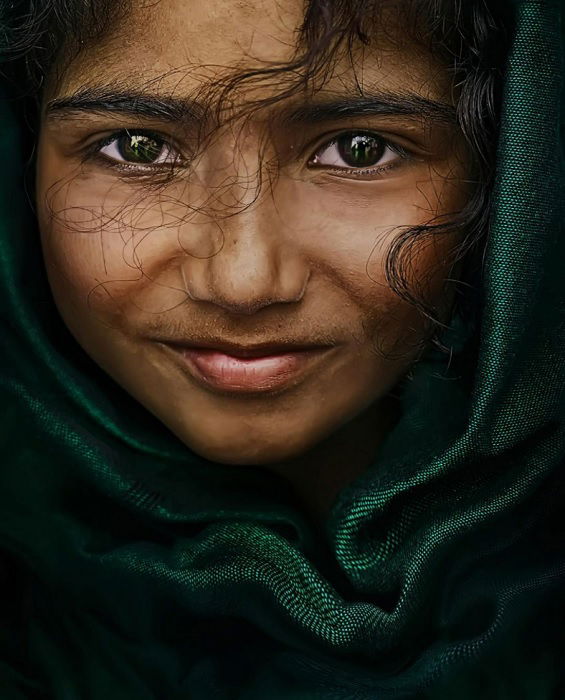
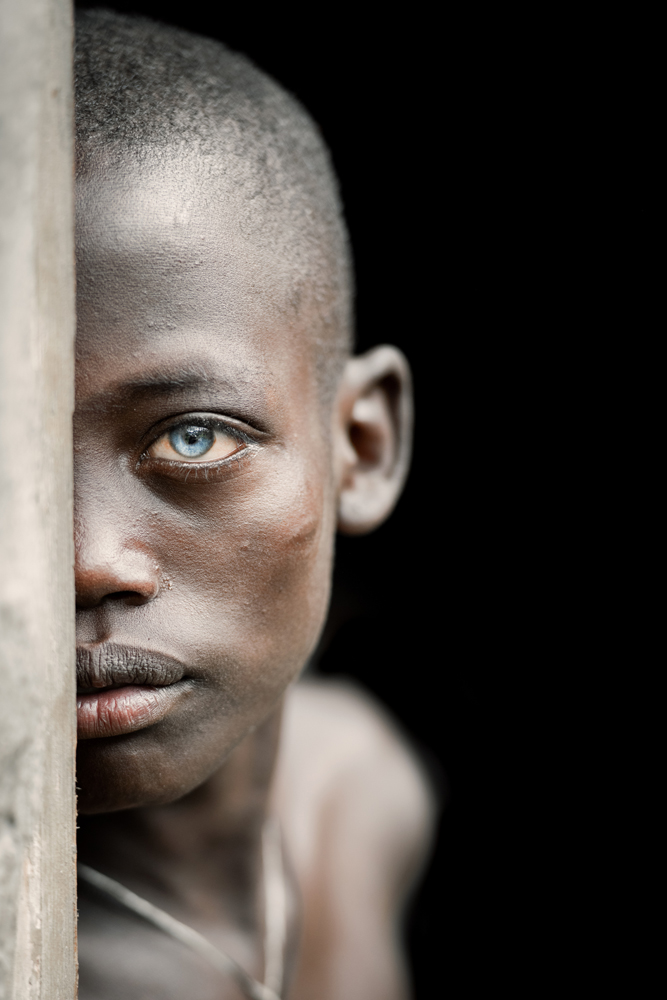
Portrait photography is a genre of photography that focuses on capturing a person or group of people’s personality, identity, energy or story through the use of lighting, locations and other techniques. There are different styles of portrait photography. These include studio portraits where the photographer has more control over the elements and over their work as a whole. Studio portraits often focus on lighting and finding effective ways of lighting the subject to provide the audience with an engaging and intriguing image that can further pursue the narrative that the photographer wants to focus on. There are also more candid portraits which could also fall under the topic of street photography. These images often have little to no planning and are spontaneous moments captured by the photographer that locate the audience in the location, making us feel closer to the subject as we see them in their natural environments. These images often focus more on composition and depth of field as techniques to bring the audience closer to the subject. A shallow depth of field will force the audience to focus solely on the subject in frame whereas a deeper depth of field will create an image with more distractions as there will be more of the image for the audience to pay attention to.
Greg Noire
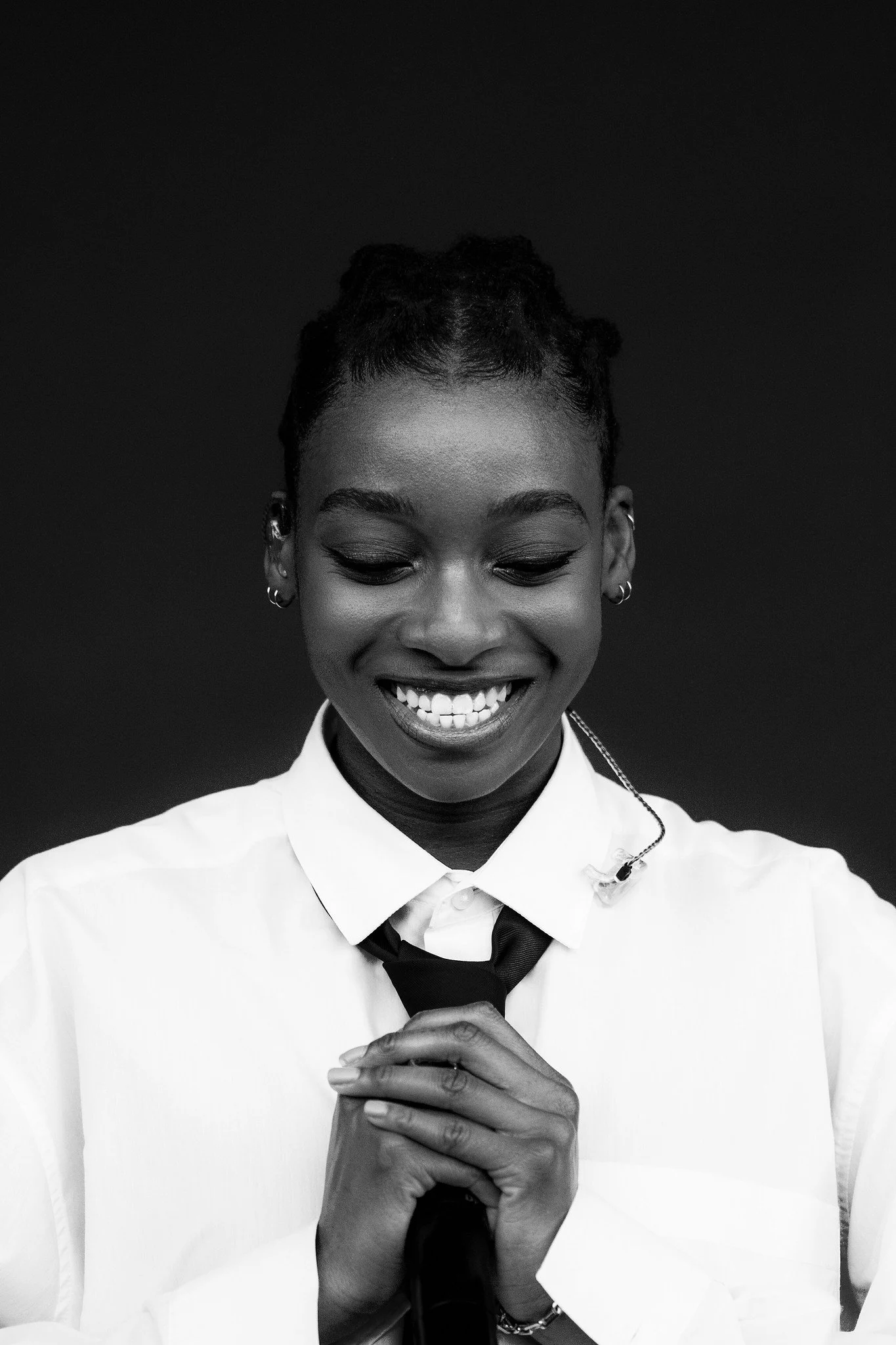
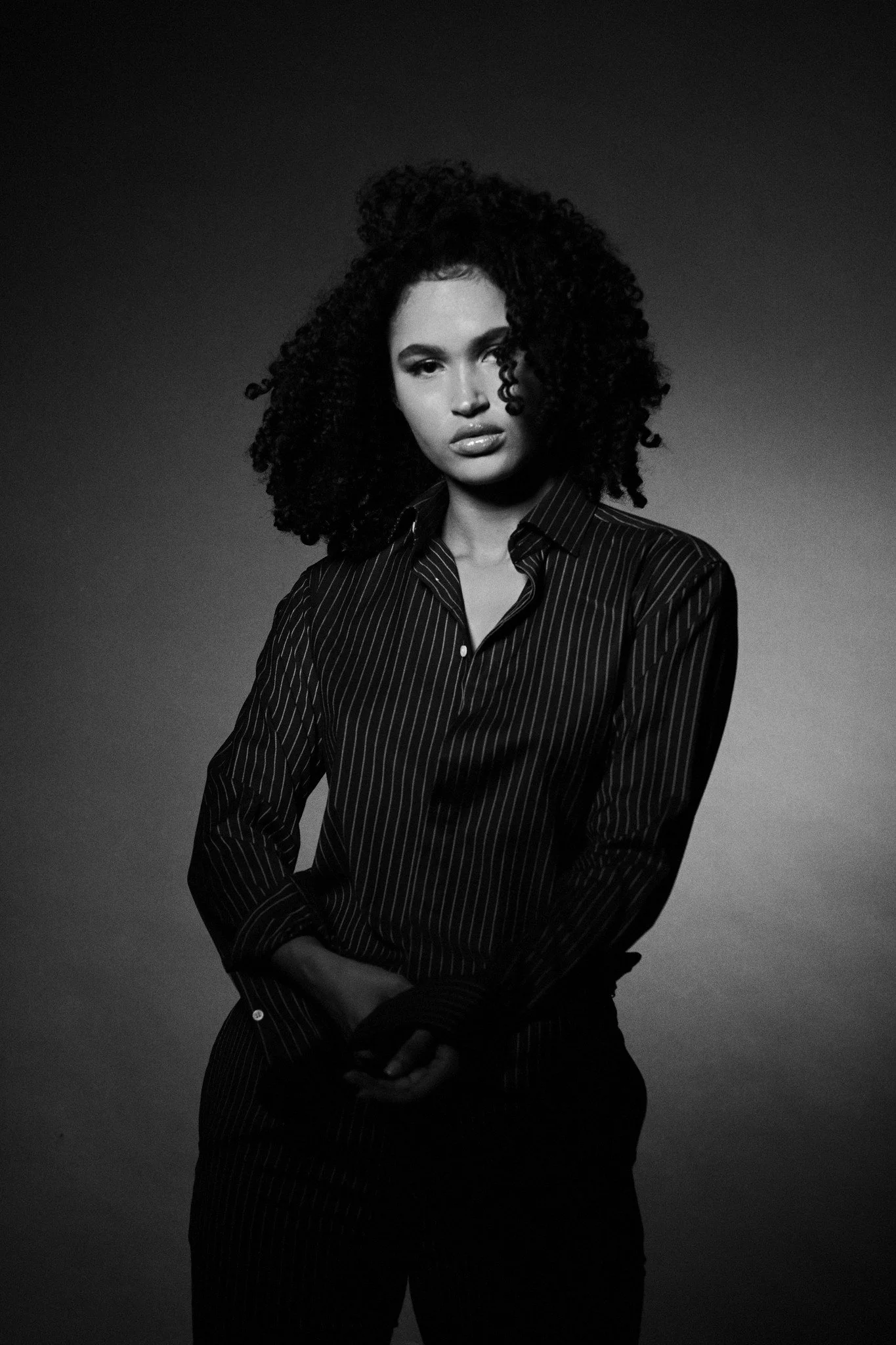
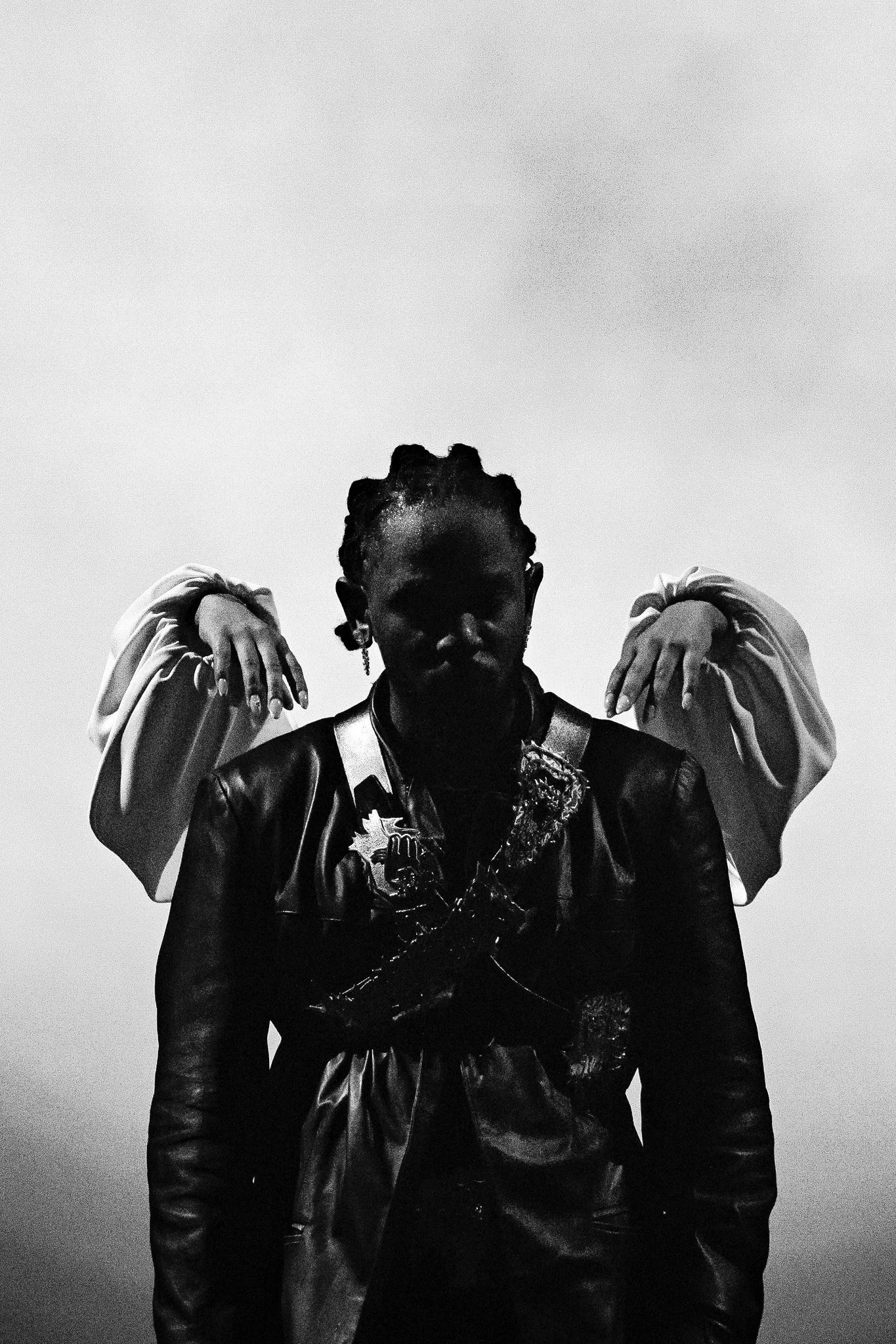
Greg Noire is a well-renowned portrait and live music photographer who’s career has found him working alongside artists such as Childish Gambino, Kendrick Lamar and Billie Eilish. He was invited in 2009 to shoot the rap group ‘Clipse’ because he knew members of the opening act, ‘The Nice Guys’. Noire stated that he ‘fell in love immediately’ even though he had ‘absolutely no idea what he was doing’. In 2014, he shot for the music festival, Lollapalooza, which was his first gig that paid highly. He quit his job and became a full time concert photographer in 2015, becoming one of the most sought after concert photographers by 2019. He has worked for all of the major music festivals including Coachella. He even experimented with studio portrait photography, giving him a broad variety of images in his portfolio. He has worked with some professional studio models for fashion magazines and also other music artists within a studio setting to create images to be used as promotional images for their upcoming albums.
Noire uses a perfectly central framed subject in the image on the left to create an image that invites the audience into the centre of the image. The use of the black and white digital edit creates a simplistic colour palette that allows the audience to focus more on the contrasts between the highlights and the shadows that help to emphasise the expression on her face. The beaming smile on the subjects face implies to us that she is in a position or environment that she feels comfortable within. As a fan of Noire’s work, I already know that this is an image taken at one of the subject’s (Little Simz) live performances. We can also get this from the fact that she is holding a microphone and she has an earpiece hanging down over her shoulder. This tells us that perhaps she is reflecting on her journey as an artist and she is proud of how far she has come.
Quentin De Briey

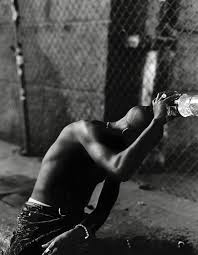
Quentin De Briey is a Belgian born photographer who lives between Barcelona and Paris. He merges the lifestyle and aesthetics from both of these cultures into his work, crafting his own unique images that feel deeply personal. To begin with, he had a career as a professional skateboarder but things took a turn for the worst when he had a bad injury. This left him with no choice but to give it up and he decided to take on the roll of a photographer’s assistant, allowing him to pursue his next career. His use of composition and lighting turn open spaces into intimate and personal images. Through his use of shadows, he draws the audience into the light on the faces of the subjects creating outcomes that feel more intimate. His use of composition and positioning of his subjects also draws the audience into the image as we only get to see a snippet of their lives. This leaves us wanting to learn more about the subjects and who they are.
In the image on the far right, De Briey uses impromptu photography to capture an image as it is unravelling in front of him. Looking at the subject of this image, we cab see somebody with no shirt on, but seemingly well dressed with their trousers and jewellery, pour a bottle of water over their head. The shallow depth of field restricts our view of the background but still allows us to locate him on the side of a run-down street somewhere due to the metal fencing with chipped paint. This potentially tells us that the subject of this image could be someone that lives in this area and their lack of clothing could indicate to us the time of year this image was taken from. It could be a warm summers day and the subject is trying to cool down on the side of the street but this creates an intriguing image as we will never know if there is more to the story behind this image than just that.
My Work
When conducting my photoshoot, I initially wanted to use the exterior location of a local river and walkway during the daylight to capture my subject in an isolated location. However, as my model finished work later than expected, it had already started to turn dark before we had started the photoshoot. Because of this, I took my light wand with me so that I could illuminate him within the darkness. I then set my ISO to around 6400 as it was extremely dark outside, my shutter speed varied between 1/30 and 1/100 and my aperture stayed the same at f/4. These settings helped me to minimize the grain whilst still being able to capture sharp enough images of my subject.
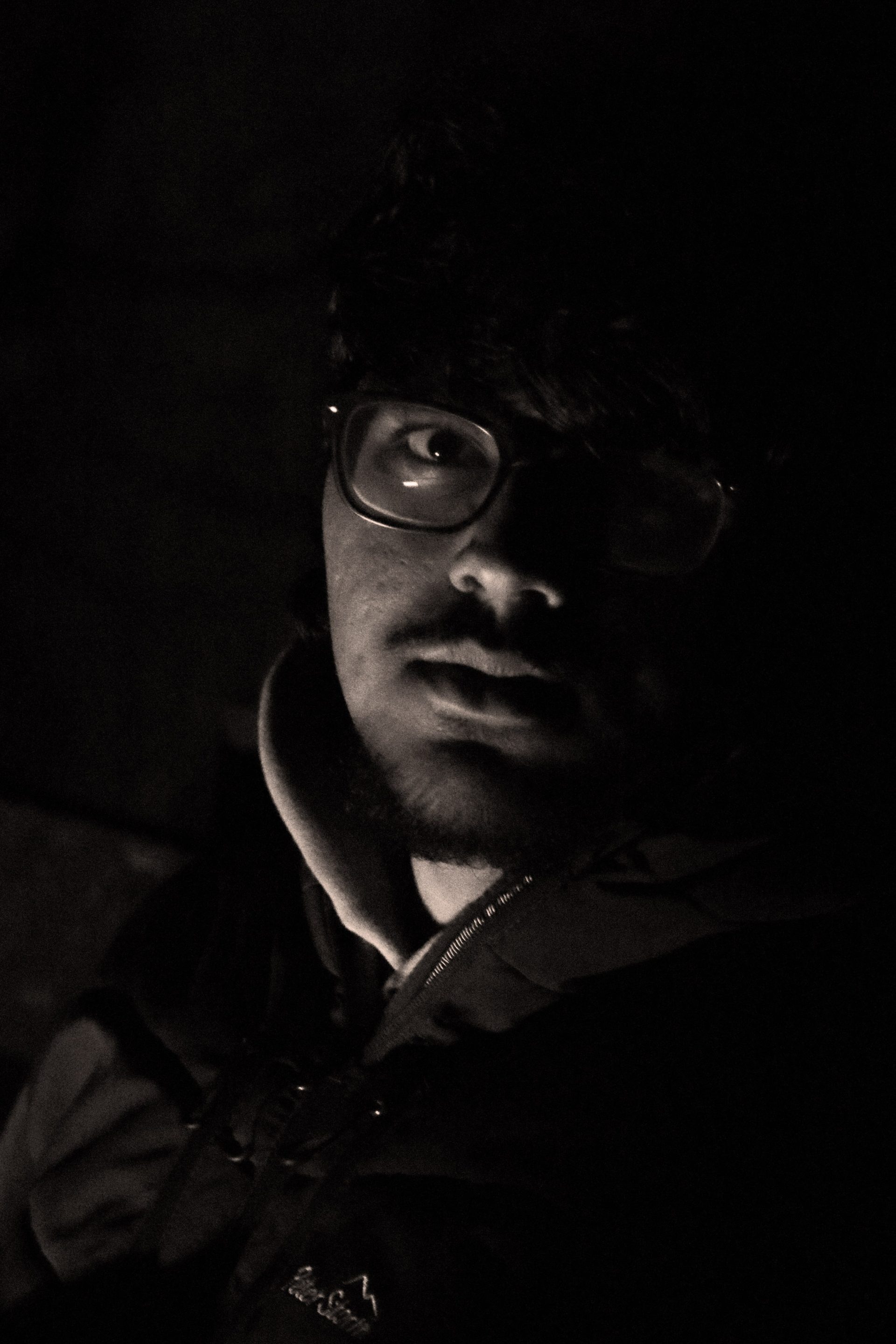
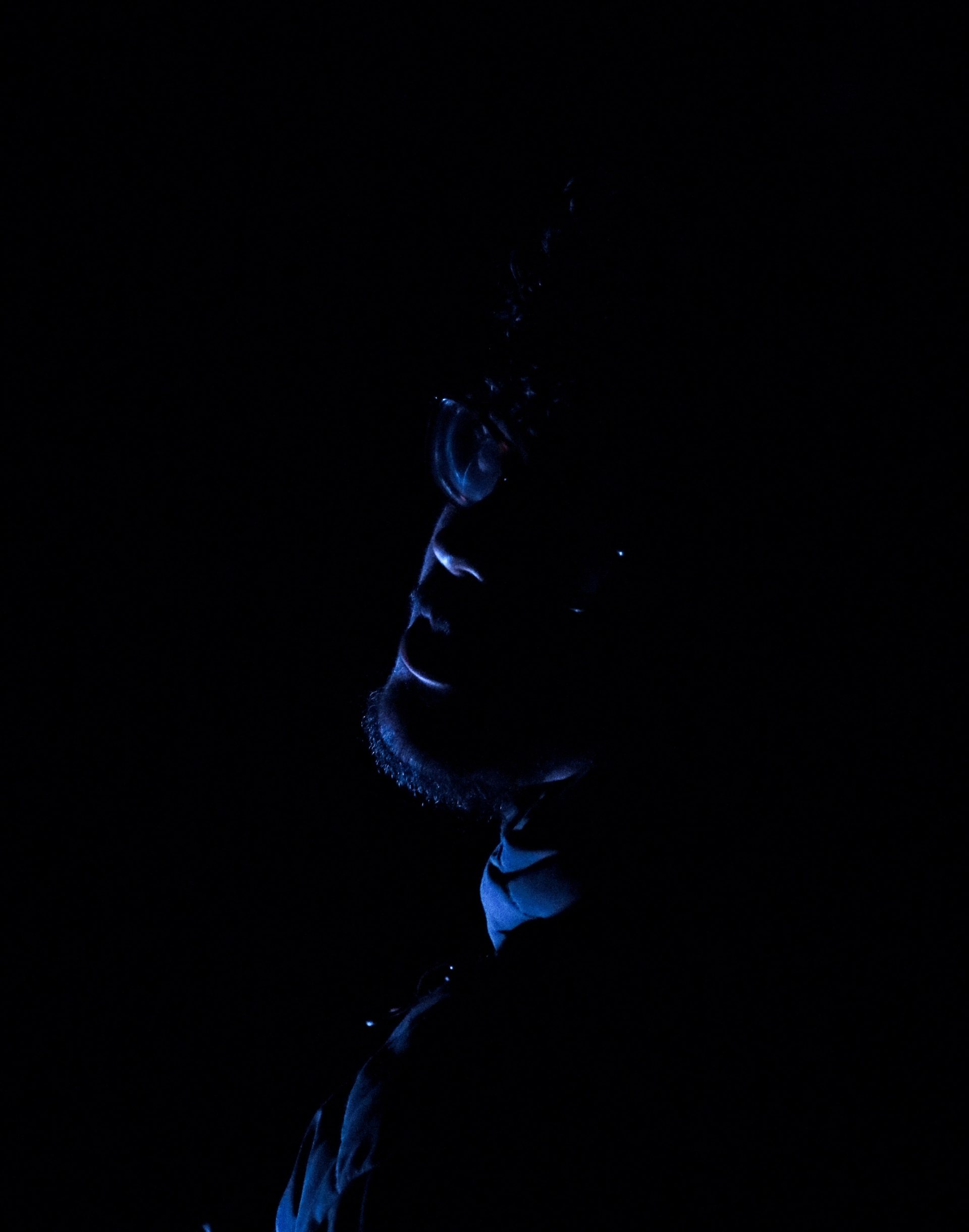
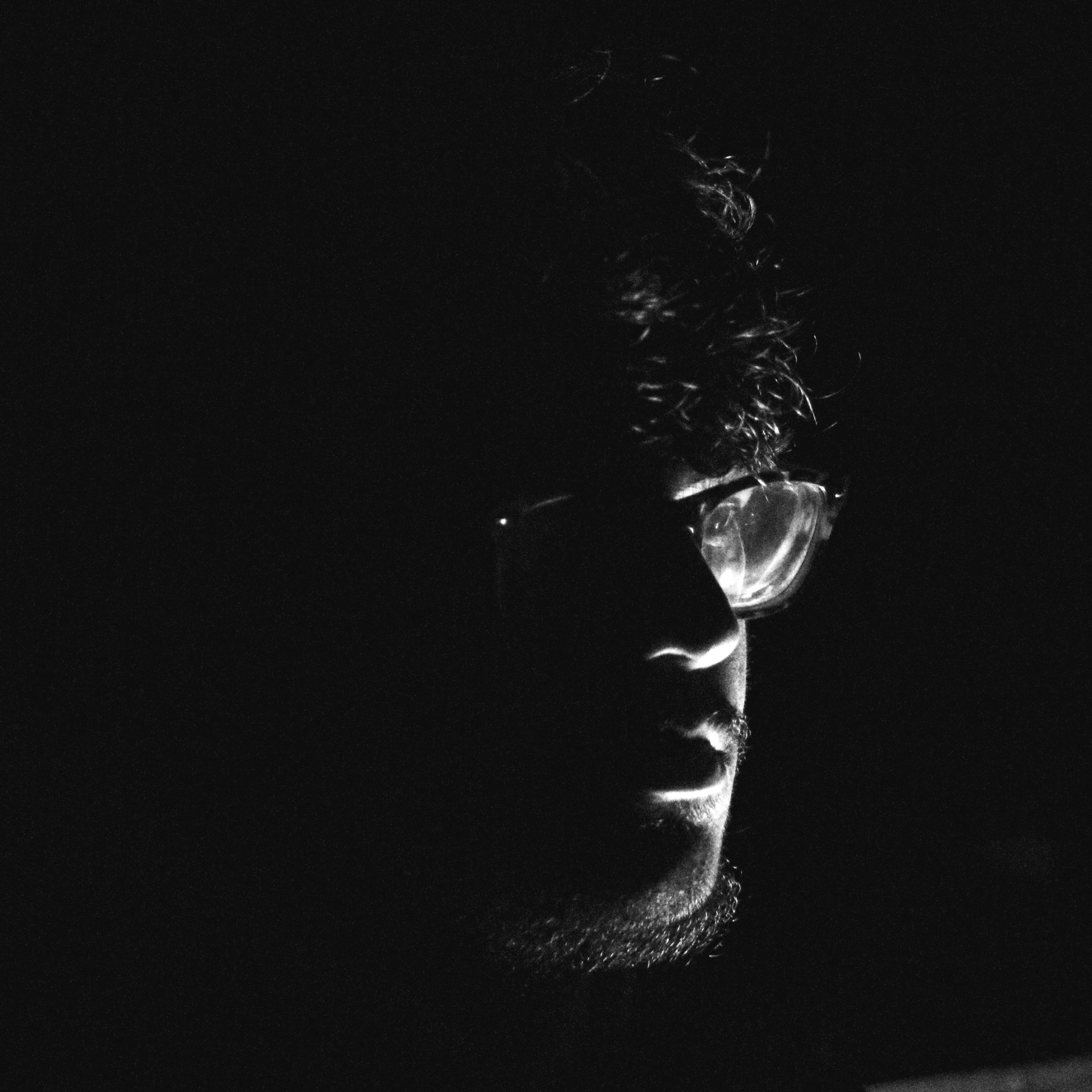
Whilst taking the images, I found a few positions for my model that worked best with the lighting conditions that I had. I made sure to make the most out of these positions before experimenting with other ways to capture his image. After I had taken the images that were lit in a more simple way with the light coming from in-front, I moved the lighting so that he was lit with split lighting. I enjoyed using this form of lighting in this location as it felt mysterious. By hiding information from the audience, it limits what they know and makes them question the context of the image. The direct address to the camera in one particular image is also very intriguing as it feels like he is looking directly at the audience. The use of low-key lighting and shallow depth of field help to isolate my model within his location, posing questions for the audience such as ‘where is he?’ or ‘who is he?’.
To edit these images, I wanted to make the changes as minimal as possible as I felt the raw images from the photoshoot had a lot of emotion and had their own story behind them. I wanted to keep this, so I made sure to do only basic adjustments for most of the images. I also made a lot of them to be black and white as I felt it further conveyed the raw emotion from the image. The 2 images where he is lit from the side and most of his face is silhouetted were edited in a way that increased the contrast and brought out the light more.
Overall, I am happy with my photoshoot but I would have quite liked to capture some images in the daylight but due to mine and my model’s schedules colliding, we did not have any other time to conduct the photoshoot. I feel I made the most out of my situation with the poor lighting as I found other ways to light the subject using my light wand and even my phone torch at one point.

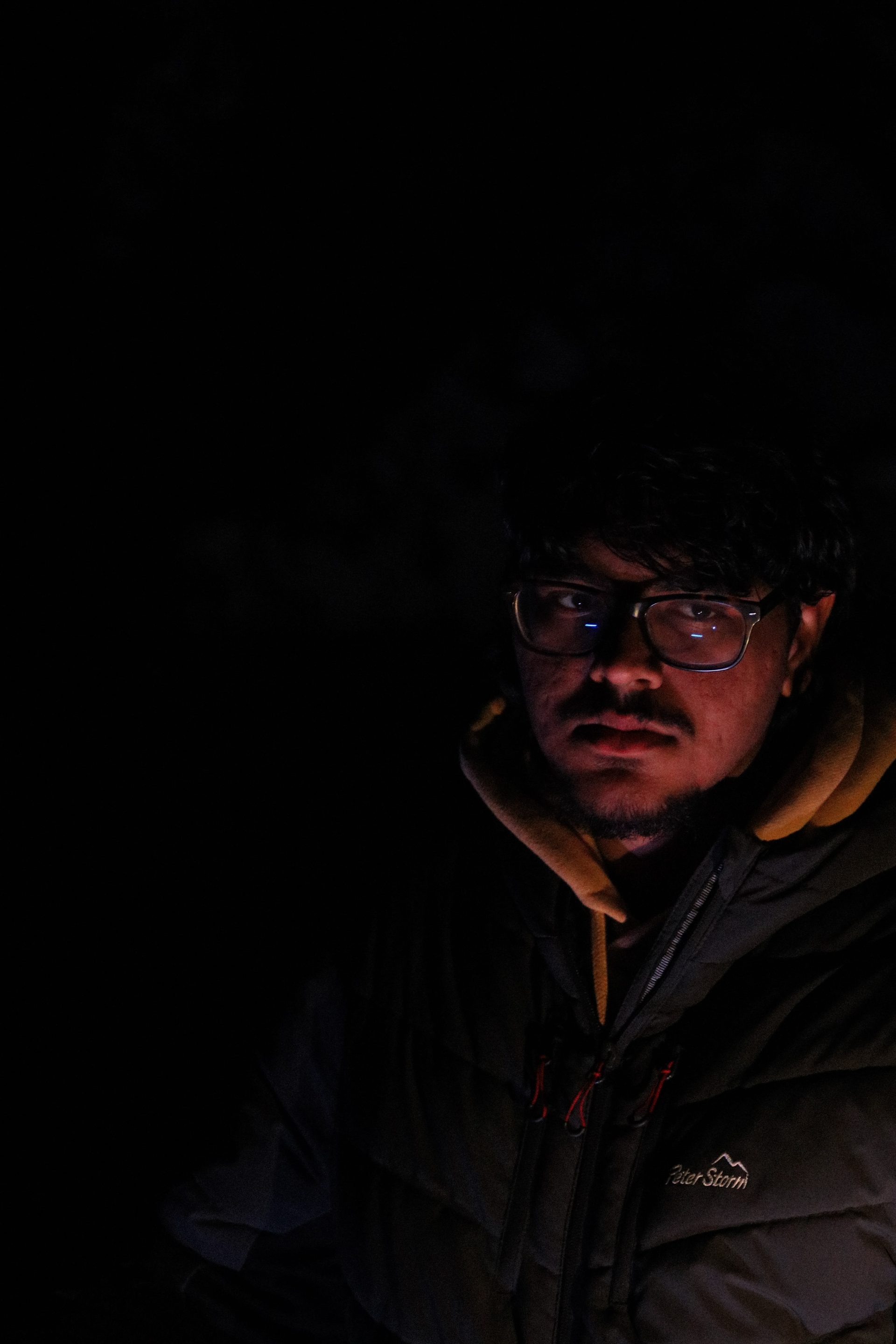
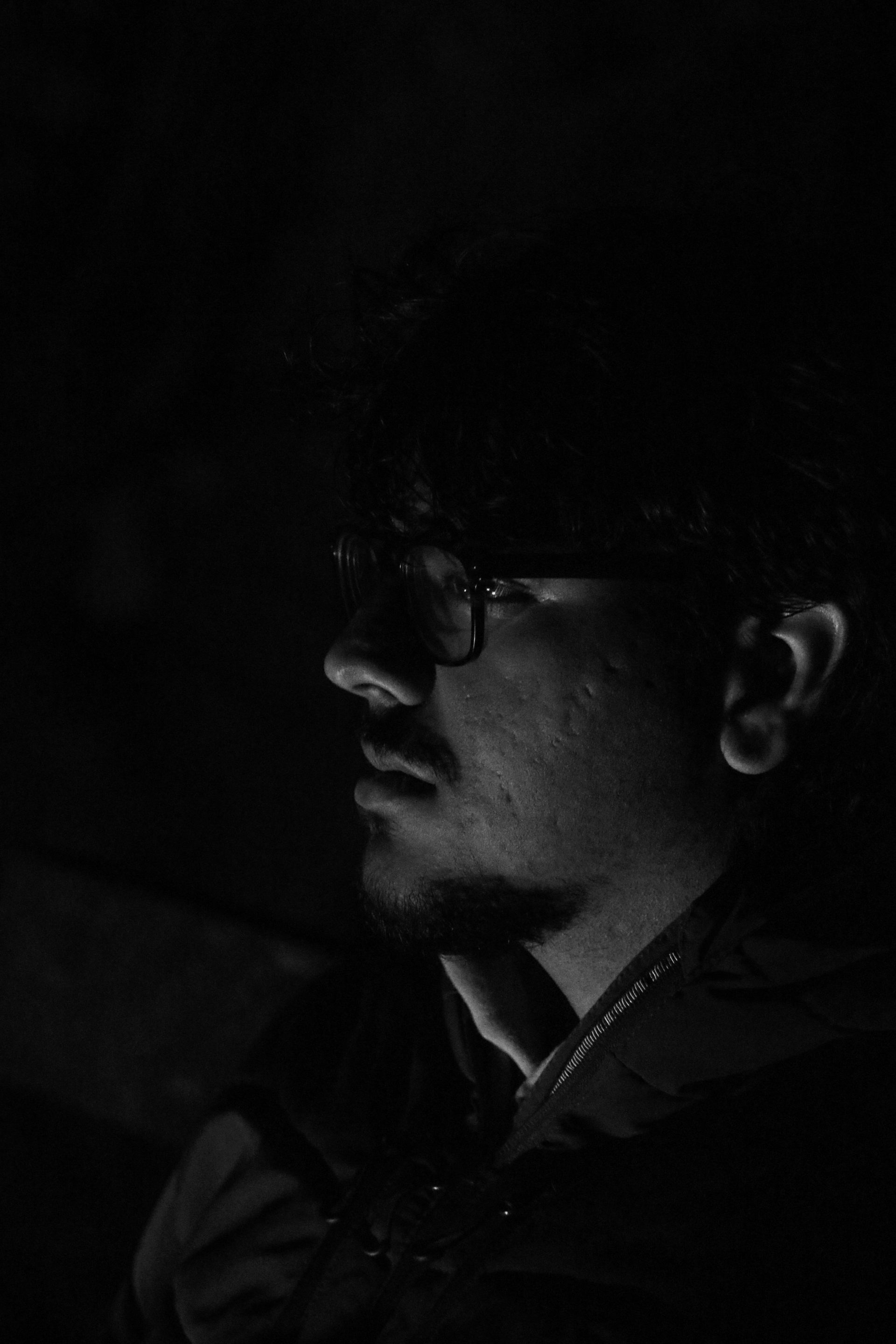
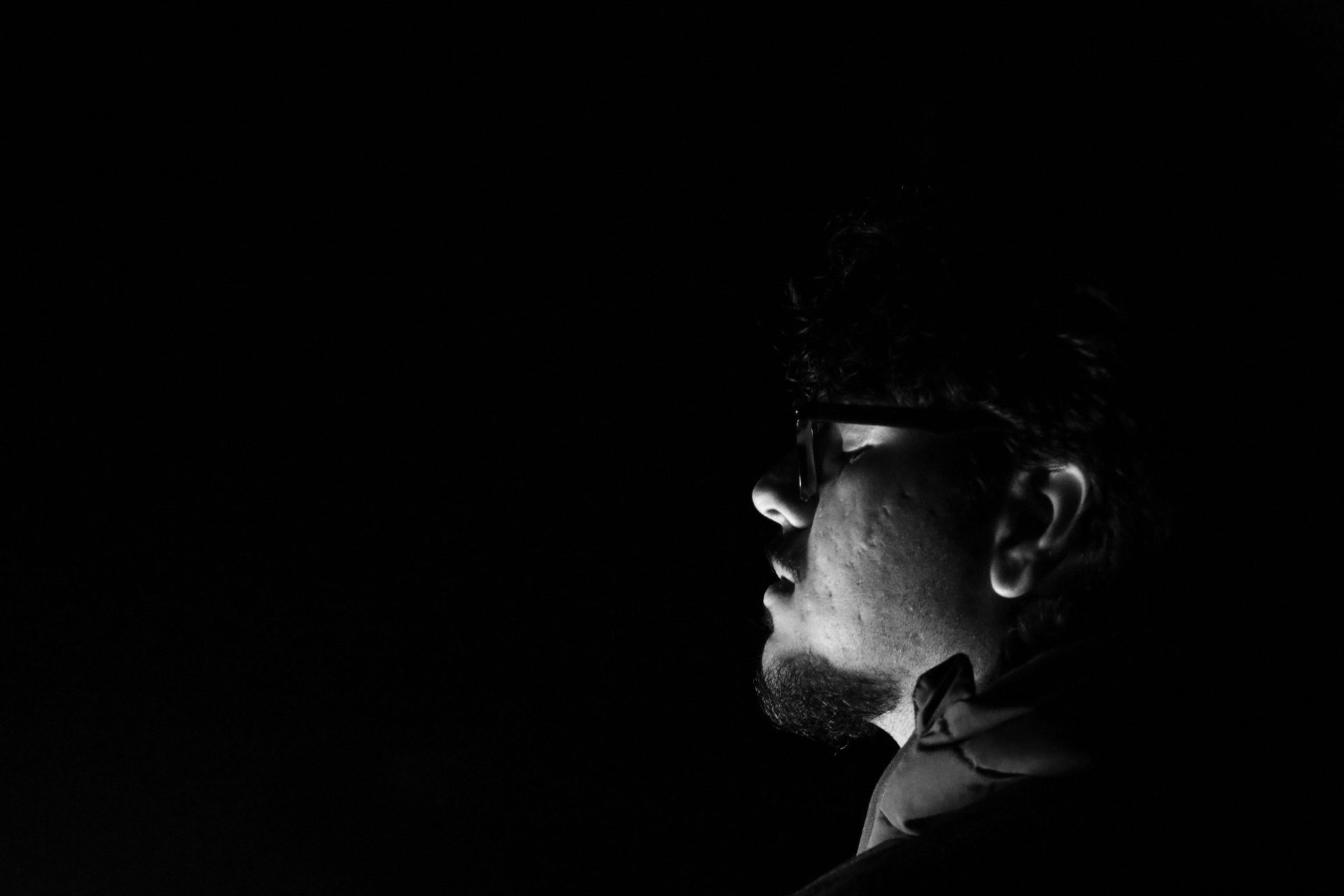
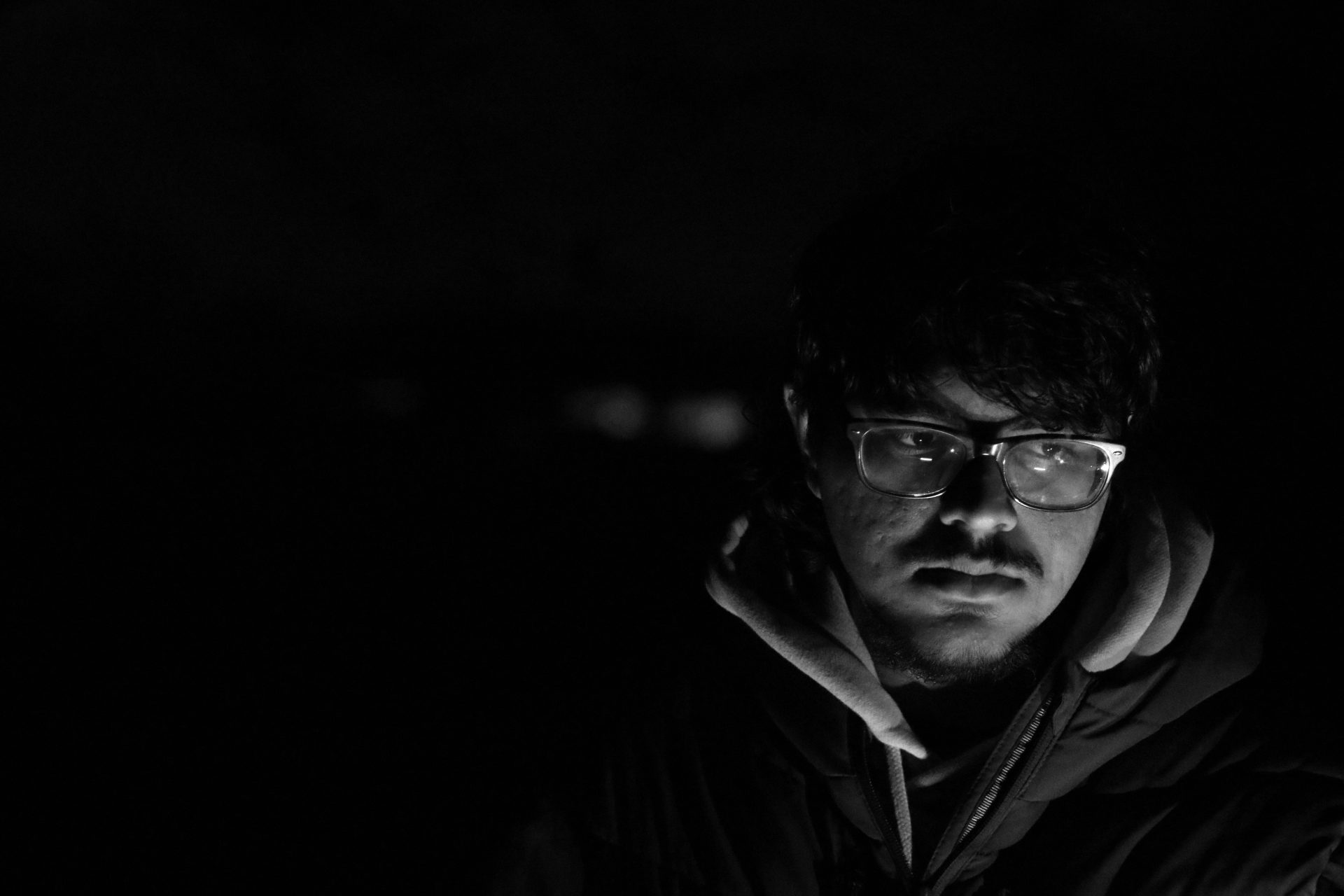
Within my image titled ‘Solo’, I wanted to frame the subject towards one side of the frame to isolate him and make him seem lonely. I thought that him being lonely would be amplified by the darkness that surrounds him and the low-key lighting that I used to light him as I wanted to create images that felt vulnerable where he was alone with his emotions. I feel I managed to do this quite well as the black and white image makes him stand out from the background and locates him in an area that is hard to distinguish. This makes him look vulnerable and isolated. Overall, I feel like this image could have done with a bit heavier lighting as it is slightly under-exposed and very dark. However, this can play into my favour as it fits the approach I was going for and makes him look isolated but in a different way than I had initially planned for.
In my image titled ‘The Abyss’, I wanted to tightly crop the subject’s face so that only their head was in the frame as I wanted an extreme-close-up on the dead pan emotion that they were expressing. I also used split lighting to illuminate just one side of their face, leaving the rest of them exposed to the darkness. This means most of the details of their face are completely lost and are not visible to the audience as I did not want anybody to be able to read too much about him. I chose this as I wanted the lighting to tell his story as it makes him seem almost alien and unnatural to the audience. I also did not want the audience to read anything from his location or his clothing, hence my choice to tightly crop into his face. Overall, I am happy with how this image came out as in a way it reminds me of the image I displayed in the middle for Quentin De Briey’s work.